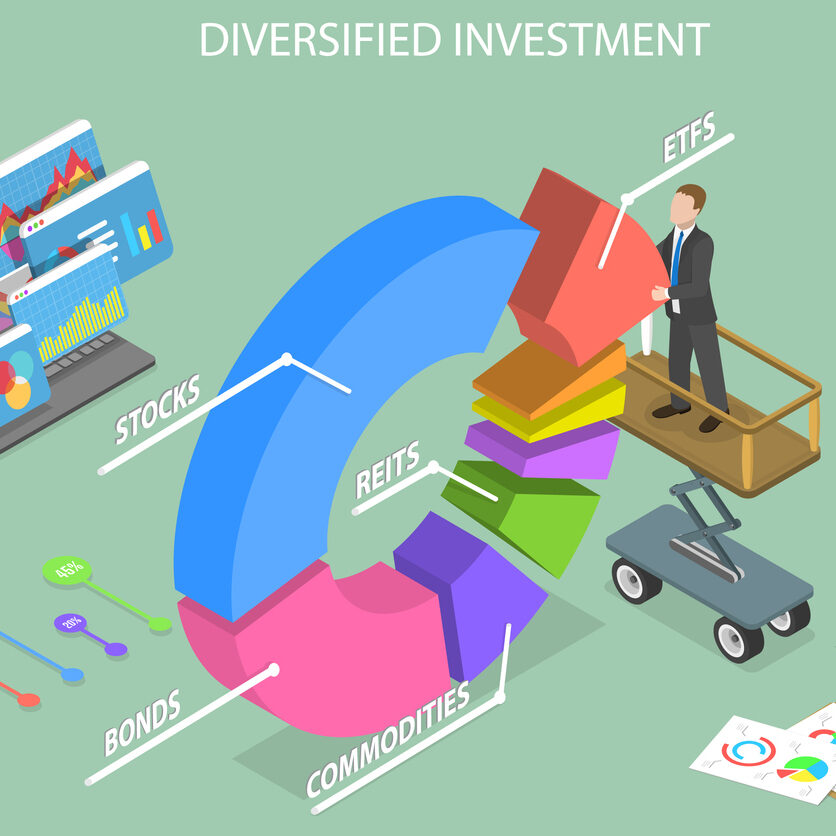
When clients come to us asking “I have money, where should I put it?” the answer isn’t ever as simple as picking a single investment. Instead, it’s better to focus on building a diversified portfolio across three main asset classes: stocks, bonds and alternative investments. Understanding how these work together can help you make more informed decisions about your financial future.
Stocks represent ownership in publicly traded companies, and they serve as the growth engine of most portfolios. The main advantages of stock investing include long-term growth potential that historically stays ahead of inflation, liquidity (you can buy and sell most stocks easily), and the potential for strong returns over time.
However, stocks come with trade-offs. They’re the most volatile asset class in your portfolio, sensitive to economic cycles, and can be pushed around by day-to-day investor emotions. As we saw in 2022, when inflation and rising interest rates created challenges, or more recently during the US tariff announcements, stocks can experience significant downturns. Stocks historically offer the highest returns, but owning them often feels like a roller coaster ride.
Bonds represent debt — you’re essentially lending money to companies or governments in exchange for regular interest payments. Traditionally, bonds provide lower volatility than stocks, predictable income, and capital preservation.
But bonds aren’t without their challenges. They’re extremely sensitive to interest rate changes, which became painfully clear in 2022 when both stocks and bonds declined simultaneously. This broke the traditional pattern where bonds and stocks typically behave like bicycle pedals — when one is up, the other is down, helping to smooth out your investment ride.
This brings us to the third asset class: alternative investments. This category includes anything outside traditional stocks and bonds — real estate, private equity, infrastructure, commodities, music royalties, hedge funds, and private credit, among others.
Our personal definition of an alternative investment is something with low correlation to stocks and bonds. We look for investments that don’t move up and down in sync with traditional markets. Alternatives also provide access to unique income streams and private markets. Remember, only about 30% of the world’s companies are publicly traded, meaning 70% of global businesses are only accessible through alternative investments.
The catch? Alternatives are often illiquid (meaning it may take months to access your money), there are possible restrictions to when and how much you can withdraw, and they’re sometimes limited to accredited investors only.
Regardless of whether our clients are 20 or 80 years old, we target 40% of their portfolio in alternative investments. This mirrors what the biggest, smartest institutional money around the world does — pension funds and major institutions typically allocate significant portions to alternatives.
The remaining 60% is split between stocks and bonds based on risk tolerance and time horizon. A young accumulator with high earnings and tolerance for volatility might have 50% in stocks and just 10% in bonds. An older client might have 20% in stocks and 40% in bonds, while maintaining that same 40% allocation to alternatives.
Here’s a key insight to keep in mind: stocks, bonds and alternatives are tools, not solutions. No single asset class is best, and no one product fits everyone. The solution, on the other hand, is your personalized financial plan based on your goals, timeline, and risk tolerance.
No matter your portfolio’s allocations, we track them closely. If any asset class deviates by 5% from its target, we rebalance — selling what’s grown and adding to what’s underperformed. This disciplined approach keeps emotions out of investment decisions and ensures your portfolio stays aligned with your long-term objectives.
An other thing to remember: your portfolio isn’t the market. Just because the S&P 500 is up or down on any given day doesn’t mean your diversified portfolio is experiencing the same movement. That’s because, done thoughtfully, you have a well-planned asset allocation across all three pillars of portfolio construction.
If you’re wondering how to structure your own portfolio across these asset classes, we’re here to help you build a plan tailored to your unique situation and goals. Reach out anytime.